


A Guide to Metal Profiles
At Rothley, we offer five profiles to enhance and protect bathroom edges with precision: Equal Angle, Quadrant, Unequal, U Profile, and Flat Bar. To the untrained eye, all profiles can...


In a previous blog, How To Choose The Right Profiles For Hotel Bathrooms At Rothley, we looked at what profiles are, where they can be used, and the different colour and style options you can choose from. Briefly, we mentioned the different types of profiles available, but this time, we'll delve further into the metal profile options and how they can work in your home.
Let's get into it.
At Rothley, we have 5 different types of metal profiles:
- Equal Angle
- Quadrant
- Unequal
- U Profile
- Flat Bar
So, let's quickly summarise what each of these profile types is for.
Equal Angle Profile:
An equal angle profile is an L-shaped profile that gets its name from having both lengths the same width, so it is equal. These are certainly the most popular type of metal profile, which can give your furniture a completely different look, providing edging, damage protection, and floor transitions.
Our Equal Angle selection is made from a selection of materials: aluminium, steel, and PVC.
- Aluminium: ideal for outdoor projects
- Steel: best for projects that need significant strength
- PVC: a nice lightweight alternative

Quadrant:
Quadrant metal profiles are curved profiles with a quarter-circle cross-section.
There are two types of quadrant: one with a sealed inside and one with an open inside.
- Sealed inside: A traditional finishing trim product, made from white PVC.
- Open inside: The hollow inside makes room for inserting cables through to hide them. Made from white PVC.
Unequal Profile:
Unequal profiles are the complete opposite of equal profiles. These have 2 lengths that are different widths, so you can get more coverage or support on one surface while keeping the other side relatively discreet.
A simple way to compare the two is to think of equal angles as offering equal coverage, while unequal angles provide targeted coverage where you need it most.
Again, the unequal angle selection offers a variety of materials: aluminium, steel and PVC.

U-Profile:
As described, the U Profile creates a U shape, so essentially, it has an additional side to it, almost like a square.
Available in a variety of lengths and finishes, including aluminium and plastic PVC, the U Profile can be used for protecting exposed edges, tidying up edge tiles, and concealing cables along floors and walls.
Compared to the other profiles that are better for decor and design, the U Profile is a go-to choice for protection and concealment. Anything that fits inside the U can be safely held and hidden.
Flat Bar:
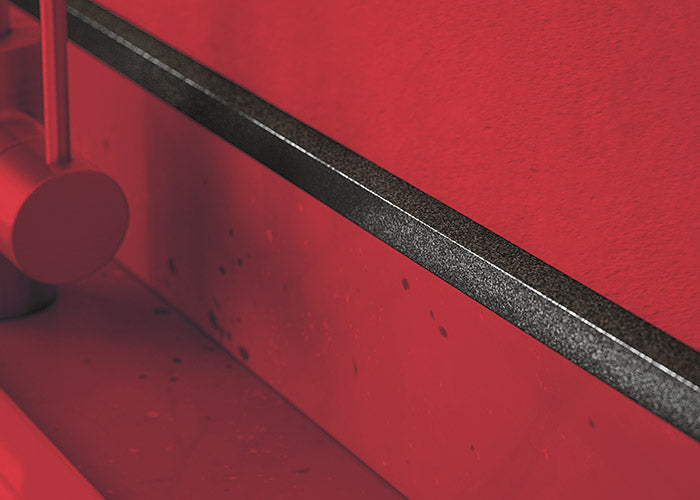
Flat bars are probably the most confusing metal profile type because, at first, you may not know what they're used for. They're completely flat and are available in a selection of finishes: natural, silver, chrome, white, light granite, light marble and more.
Flat bars can be used for all types of DIY projects, adding strength to a project, joining materials, protecting edges, and more.

Conclusion:
To the untrained eye, all metal profiles can look very similar and seem to have the same use. Whilst some applications overlap, each profile offers different ways to finish, protect and enhance surfaces. From DIY projects to edge trimming, edge protection and cable hiding, there are so many ways to use Rothley profiles.
Want to take a closer look? Explore our collection of metal profiles today.